


Noise and Vibration Protection
The future belongs to the quiet railway.
Noise reduction is a high priority for Deutsche Bahn. By the end of 2020, it had achieved its goal of reducing rail traffic noise nationwide by 50 percent compared to the levels in 2000.
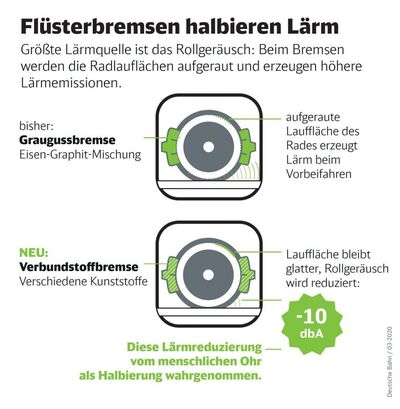
To reach this goal, Deutsche Bahn implemented measures on its rail network and rolling stock. The retrofitting of existing freight wagons with the low-noise composite brake shoe – the "whisper brake" – played a key role in this effort.
Noise mitigation is an integral part of the planning process.
Noise protection along the railway line is a crucial component of new construction and expansion projects. The railway protects residents from rail traffic noise through active and passive noise abatement measures.
For significant structural changes during the expansion and new construction projects on the Hamburg/Bremen – Hanover rail line, the legal provisions for noise prevention apply.
- a railway line is extended by one or more through tracks.
- through a significant structural intervention, the assessment level is increased by at least three dB(A).
- through a significant structural alteration, an existing noise pollution is substantially increased.
It has to be this quiet: Emission limits for noise prevention
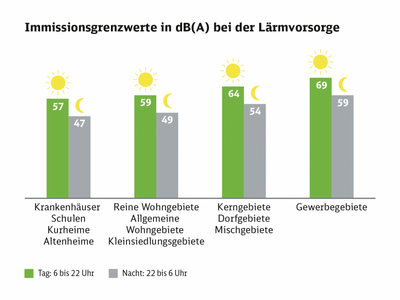
Targeted noise mitigation measures are an important part of project planning and an integral part of the planning approval process.
Whether the legally prescribed emission limits are exceeded is determined by an independent noise expert.
Based on the level of noise exposure and the local conditions, noise mitigation measures are derived, incorporated into the calculations, and designed to ensure compliance with the limits.
Protection against vibrations
The Federal Immission Control Act (BImSchG) also mentions the issue of vibrations. However, it does not establish binding regulations regarding immission limit values or forecasting and assessment procedures.
Therefore, in its planning, the railway company relies on technical rules such as DIN standards and VDI guidelines.
To reduce the frequencies responsible for noise pollution, under-ballast mats are used, for example. The railway company lays them under ballast, sleepers, and tracks to protect against vibrations.